Bauhaus. Bauhaus. Bauhaus. Say the word and watch every designer in the room nod.
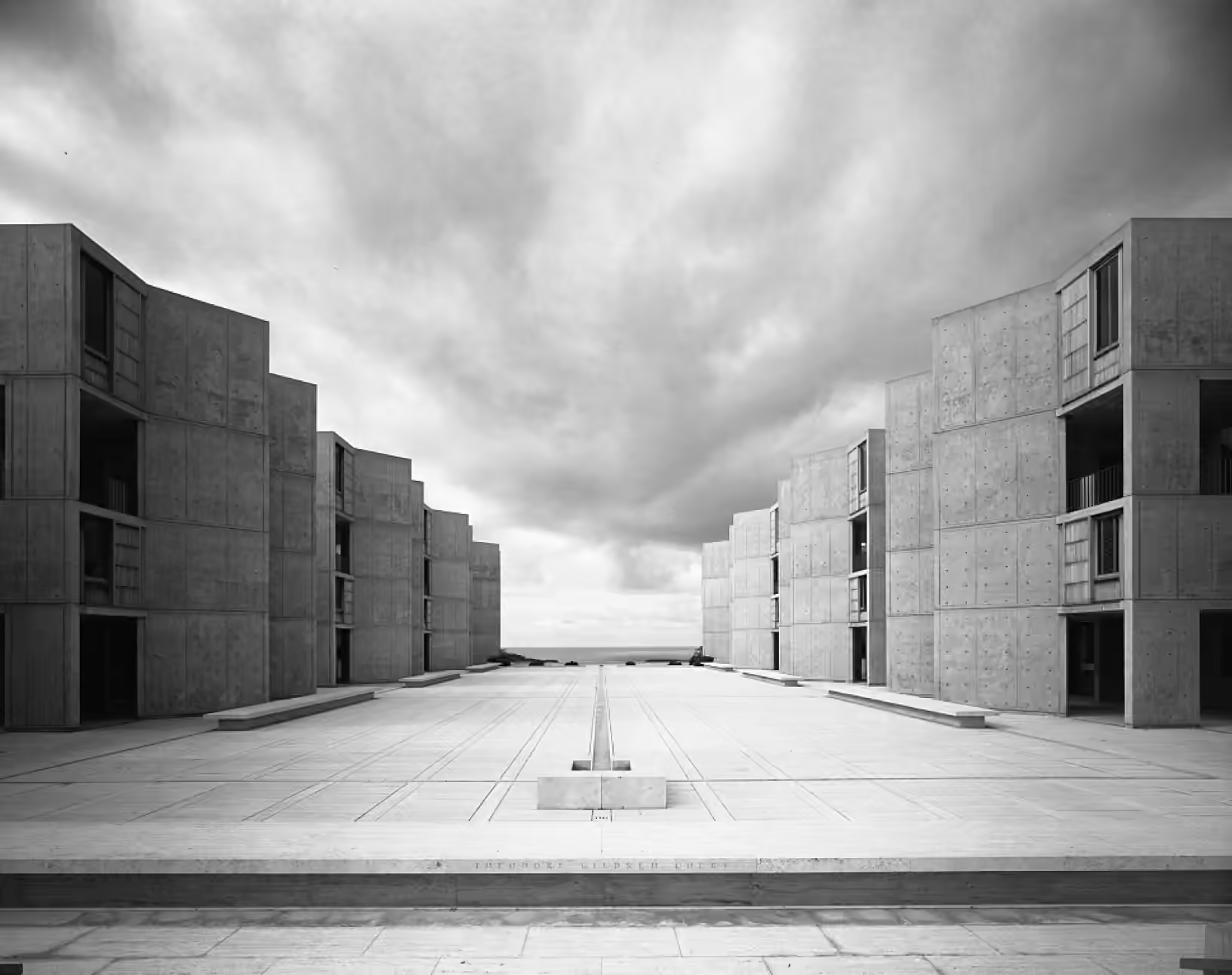
Louis Isadore Kahn, Salk Institute, La Jolla, Ca.
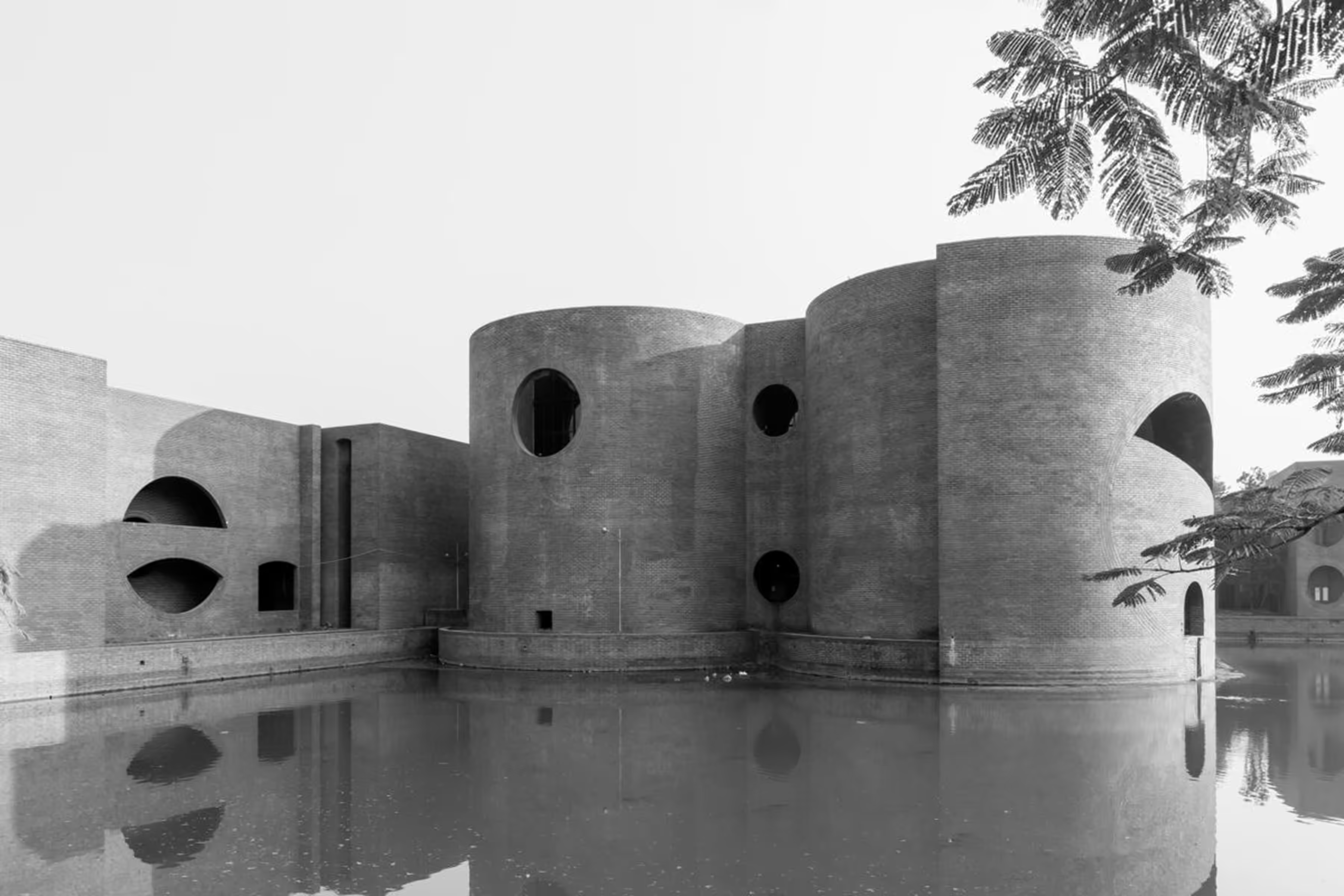
Louis Isadore Kahn, The National Assembly Building in Dhaka, Bangladesh
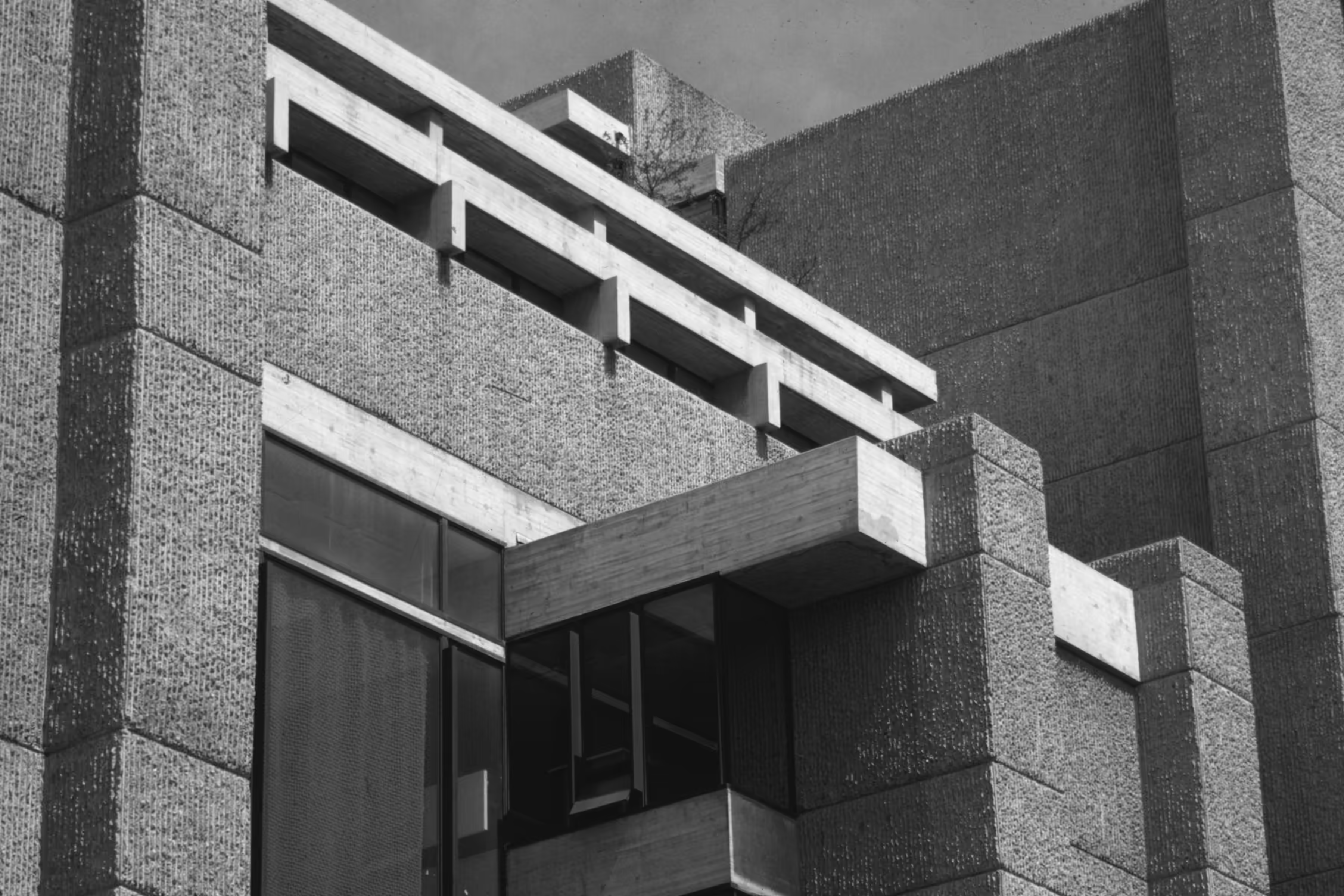
Paul Marvin Rudolph, Art and Architecture Building, Yale University, New Haven, Connecticut
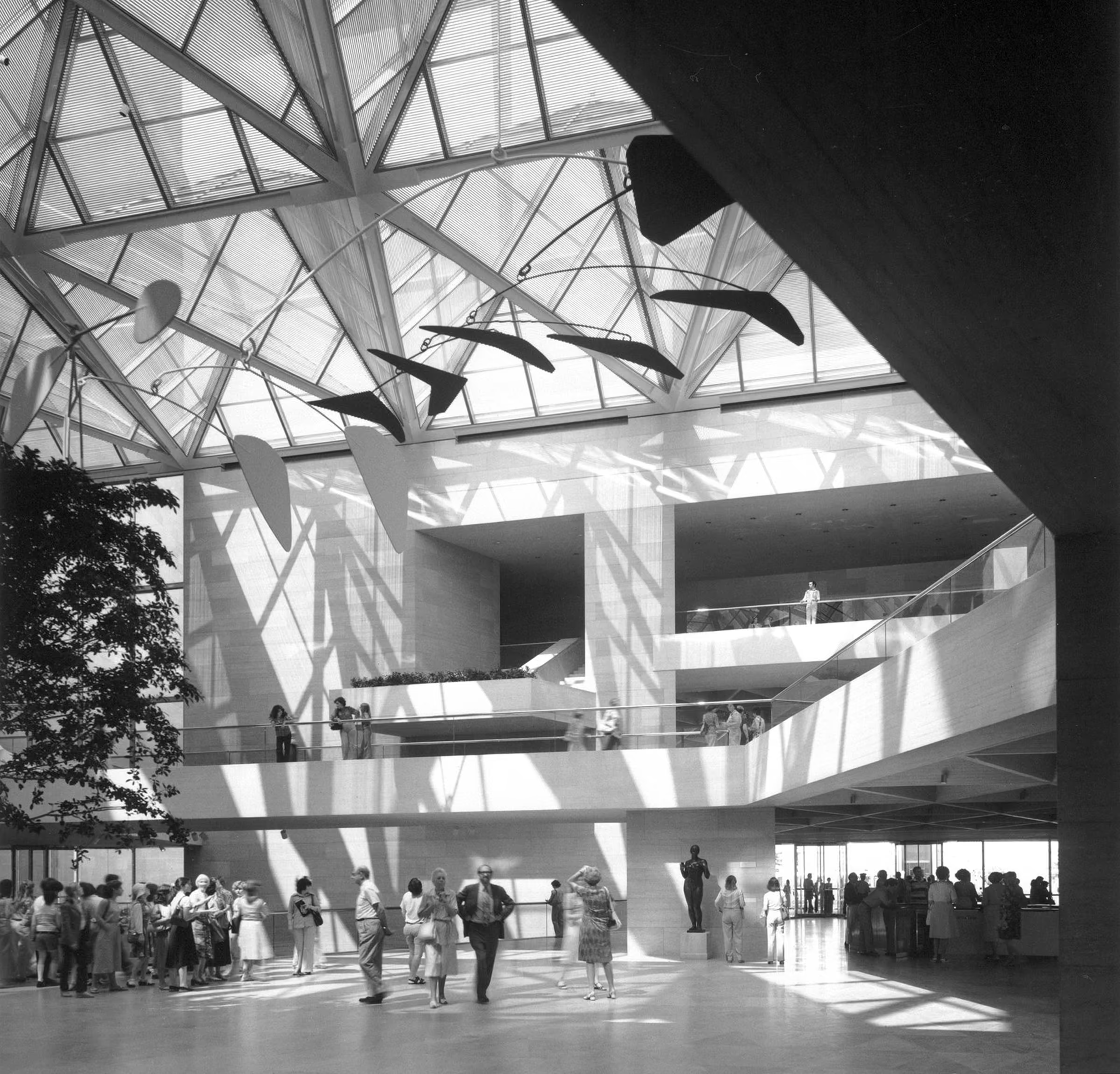
Ieoh Ming Pei, National Gallery of Art, East Building, Washington, D.C.
"What principles guided your design system?" "Well, you know—I'm a huge admirer of the Bauhaus school, so my work follows the same principles established in the early twentieth century..."
That conversation plays on loop across design studios, architecture firms, editorial offices. And there's nothing wrong with it—digging into old movements is genuinely useful. It only becomes a problem when Bauhaus stops being a source of actual thought and becomes a shield against the absence of it.
Architecture, graphic design, fashion, interfaces, music—everywhere you look, someone's invoking the German school as an intellectual alibi. Fair enough: its influence is real and immense. But the story of modernism doesn't end in Dessau. Running parallel to it were Soviet Constructivism, Dutch De Stijl, and American Modernism. The last one gets the least airtime—which is a mistake, because its contribution to contemporary architecture and visual culture cuts just as deep.
The people behind this site studied architecture under the old post-Soviet educational system in Ukraine during the 2000s and 2010s. That came with its own specific flavor. More importantly, there was one real advantage: we were shown modernism not as a single linear story, but as a network of parallel movements. Similar ideas erupting in different corners of the world almost simultaneously. Artists, architects, and engineers, all searching for a new language for a new era: standardization, industry, function, simplicity, the refusal of unnecessary ornament. The only difference was which flags those ideas flew under—and which political regimes would later amplify them, mutate them, or bury them alive.
Alongside the European modernists—Bauhaus, Jan Tschichold, Gerrit Rietveld—emerged Soviet Constructivists. Both movements drove toward modernization, standardization, industrial logic. Both built a new grammar of minimalism, function, and form. But these ideas fractured across wildly different social, political, and cultural realities. In the USSR, Stalinist repression erased the modernists entirely. El Lissitzky, one of the most electrifying minds Soviet Constructivism produced, left behind almost nothing built. A single realized project was a staircase at a sanatorium in Kislovodsk. The rest—the manifestos, the spatial experiments, the radical typography—lived on paper, because paper was safer than concrete.
Meanwhile, Germany had its own way of killing good ideas. Tschichold—the man who essentially wrote the rulebook for modern typography—publicly renounced his own revolutionary ideas under Nazi pressure, retreating into classicism. And Hitler, with characteristic irony, began mandating pitched roofs and timber-frame construction across the Reich. There's a street near the Uncle Tom's Cabin U-Bahn station in suburban Berlin that makes this collision almost unbearably visible: modernist minimal housing on one side, Nazi-era buildings on the other—stone-faced, medieval-looking, built in the 1930s. Same decade, same city, but totally different civilizations.
American Modernism was the third force, and it played by different rules entirely. Unlike its European and Soviet counterparts, American architecture never got strangled by political purges, ideological prohibitions, or the total erasure of war. It had room to breathe, to evolve, to take risks over decades. The United States in the early twentieth century was deep inside its second Industrial Revolution: mass production, assembly-line logic, rapid steel-frame construction, aggressive experimentation with glass, concrete, and new materials. That industrial reality rewired architectural thinking itself.
This site exists to give that third force its proper seat at the table.
In America, architecture stopped being a conversation about the art of facades and became a system: structure, function, space, material, production, and the human being inside all of it. And to be honest, architecture has never been a discipline operating in isolation—it breathes the same air as the era that produces it, and that breath moves through art, culture, and everything else. Looking at these architects means looking at the era itself.
These conditions gave the American Modernist tradition a handful of defining characteristics that shaped our selection of architects for this site:
The use of industrial materials and systems that made it possible to build faster, higher, and with more audacity than anyone had before.
Revolutionary ideas about the integration of architecture into the natural environment—buildings that don't conquer a landscape but start a dialogue with it.
Bold formal moves dictated by function, structure, and clarity, not decoration for decoration's sake.
We built this website to replicate the feeling of opening an old folder—a carefully assembled archive belonging to someone obsessed not just with history, but with the people who made it. It's not a dry catalog. Not a textbook. Think of it as a researcher's desk: folders, blueprints, clippings, margin notes, all pulled together in one place.
Some of the names here, like I.M. Pei or Frank Gehry, won't appear on a standard list of early American modernists. We included them not as members of a single period, but as carriers of a wider tradition. Architects who took modernism's core ideas and ran with them deep into the second half of the twentieth century, building the bridge to the architecture of today.
The folder's open. We won't tell you where to start.
Sergii Valiukh, Founder of Tubik Studio